Last updated on 26 April 2026
We Tested 14 Portable Water Filters To See Which Were The Best
After three months and 14 filters tested across a range of price points and conditions including day hikes, backcountry camping, and emergency preparedness scenarios, the pattern was familiar. Most were adequate, a few were genuinely solid, and one made us run the numbers twice, because the performance-to-build-quality ratio didn’t match what we’d come to expect from this category.
This water filter doesn’t have the name recognition of LifeStraw or the forum credibility of Sawyer among the ultralight thru-hiking crowd who argue about flow rates and squeeze pouch durability at 3am. But what it does have is 0.1 micron hollow fiber filtration that handled every water source we threw at it, a stainless steel body that feels like actual equipment rather than a plastic novelty, and a setup process so simple it’s almost suspicious, because there isn’t one. For most people who want a reliable water filter for their pack, their car, or their emergency kit, this is the one worth paying attention to.
Best Overall
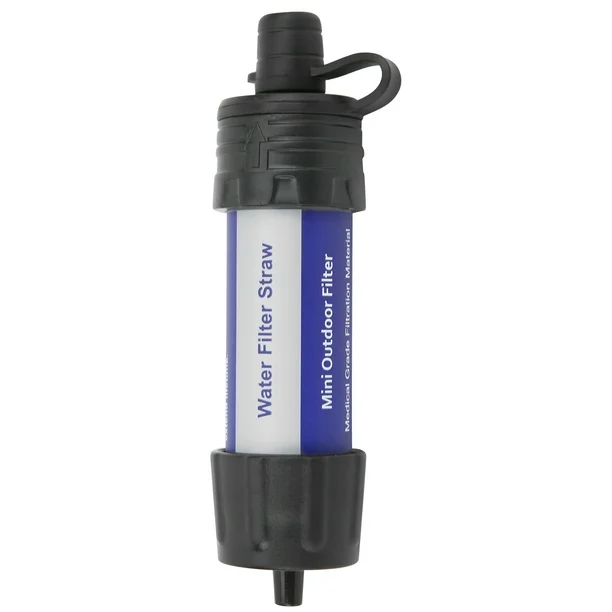
Survival Sip
- 0.1 micron hollow fiber, provides finer filtration
- Durable stainless steel military-grade construction
- Up to 100,000 gallon filter lifespan
- Triple-tested for bacteria, parasites & microplastics
- Ultra-compact at under 2 oz, fits in any pocket or kit
- No setup, no priming, no accessories needed — just sip
- Lowest price in its performance class
- Under 90-day money-back guarantee
- Hard to find in stock
Overall Score
9.5
Excellent

User Ratings (1.9k)
Currently on Sale – Up to 50% Off!
Premium Pick
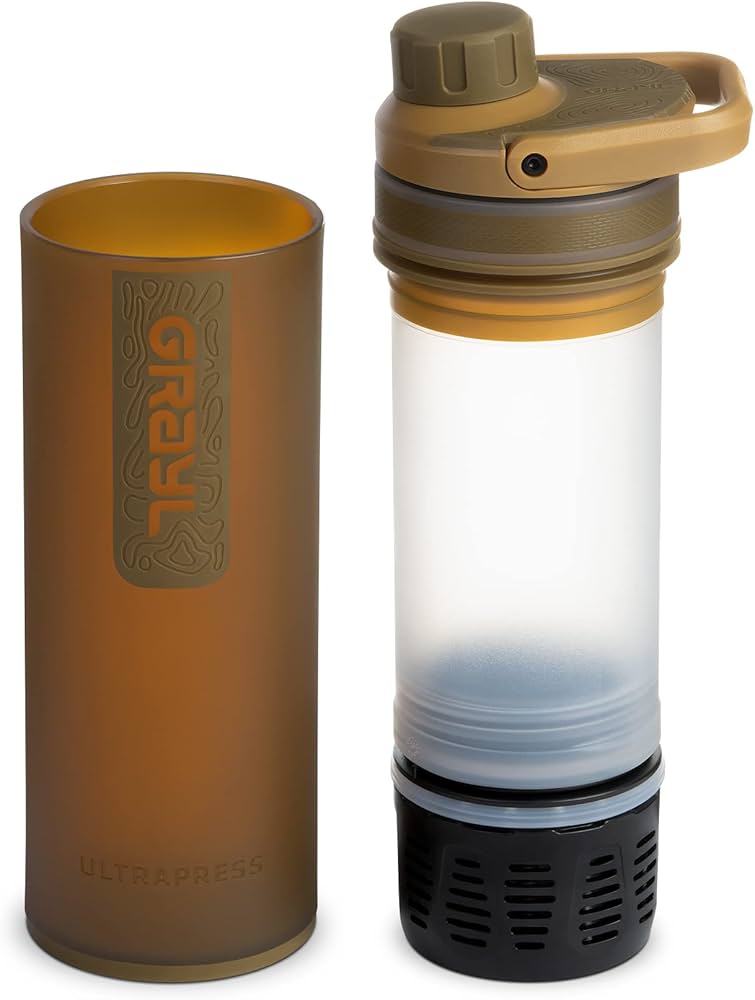
Grayl UltraPress
- Removes viruses in addition to bacteria and protozoa
- Press-style design filters water in under 10 seconds
- Good for international travel where viral contamination is a concern
- Extremely short 40-gallon filter life, constant cartridge replacements needed at ~$25 each
- Heavy at 10 oz, impractical for ultralight kits or everyday carry
- Cannot be used as a straw, requires filling the bottle first
- Bulky bottle design doesn’t fit standard pack pockets
Overall Score
8.8
Good

User Ratings (2.1k)
Budget Pick
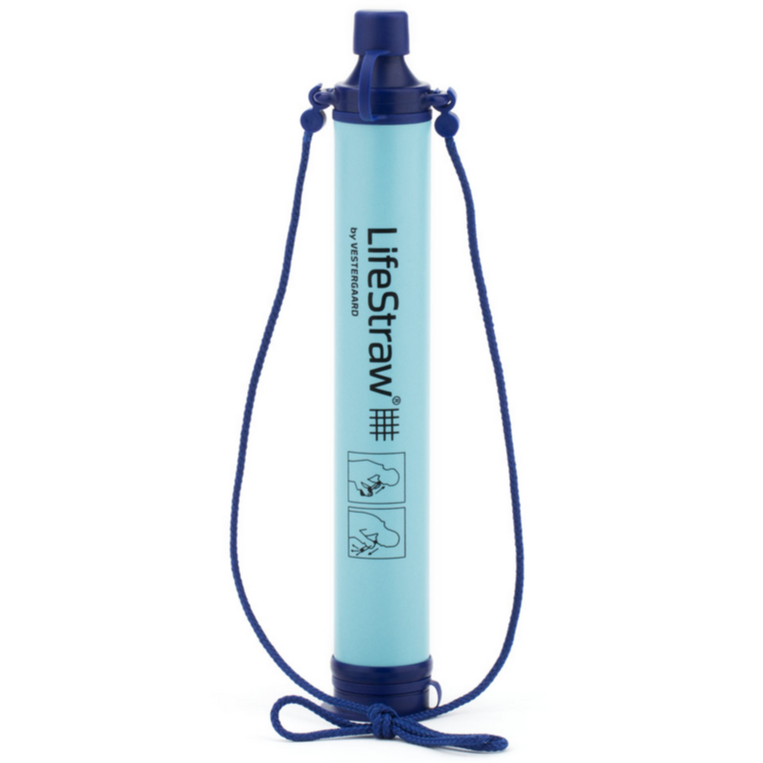
Cobra RAD 700i
- Lightweight at 2 oz
- Only 0.2 micron — less fine filtration than top competitors
- No way to backflush or clean, need to throw it away when it’s done
- Short 1,000 gallon lifespan which is essentially disposable
- Straw-only: cannot filter into bottles, pots, or cups
- Must get your face down to the water source to drink
Overall Score
7.4
Above Average
User Ratings (2.5k)
Best Overall in 2026
Best Overall
Survival Sip
- 0.1 micron hollow fiber, provides finer filtration
- Durable stainless steel military-grade construction
- Up to 100,000 gallon filter lifespan
- Triple-tested for bacteria, parasites & microplastics
- Ultra-compact at under 2 oz, fits in any pocket or kit
- No setup, no priming, no accessories needed — just sip
- Lowest price in its performance class
- Under 90-day money-back guarantee
- Hard to find in stock
Overall Score
9.5
Excellent
User Ratings (1.9k)
Currently on Sale – Up to 50% Off!
Why the Survival Sip wins
After testing 14 portable water filters across three months of hiking, camping, and emergency preparedness drills, the Survival Sip was the filter that changed how we think about this category, and specifically about what most people actually need from a portable water filter.
The portable water filter market has a particular problem, the outdoor enthusiast community has spent years optimizing for a single set of metrics: maximum versatility and filter lifespan, and the major manufacturers have followed them there. The result is a crop of filters that are extraordinarily capable on paper, extraordinarily fiddly in practice, and extraordinarily frustrating to rely on when you actually need clean water in a hurry. They require back-flushing syringes and they ship with squeeze pouches that split at the seams after a few uses. They demand that you carry adapters, replacement hoses, and a working knowledge of inline hydration setups before they’ll function the way the marketing photos suggest. For the small community of ultralight hikers who find that process enjoyable, those filters are perfect. For everyone else, they’re a $25 device that lives in a drawer after the first camping trip because the setup was more hassle than boiling water.
The Survival Sip takes a fundamentally different approach, and it’s one that we think is long overdue. Rather than chasing maximum theoretical lifespan or modularity at the expense of everything else, it’s been designed around the question that actually matters to most people: will this thing give me safe water when I need it without making me work for it?
The filtration hardware covers exactly what you’d expect from a serious portable filter: 0.1 micron hollow fiber membrane, which is the same core technology used across the category. But where many competitors use plastic housings that feel disposable, the Survival Sip is built around a stainless steel body that inspires genuine confidence in durability. This isn’t a filter you worry about cracking in your bag or degrading in long-term storage. It feels like a real piece of equipment.
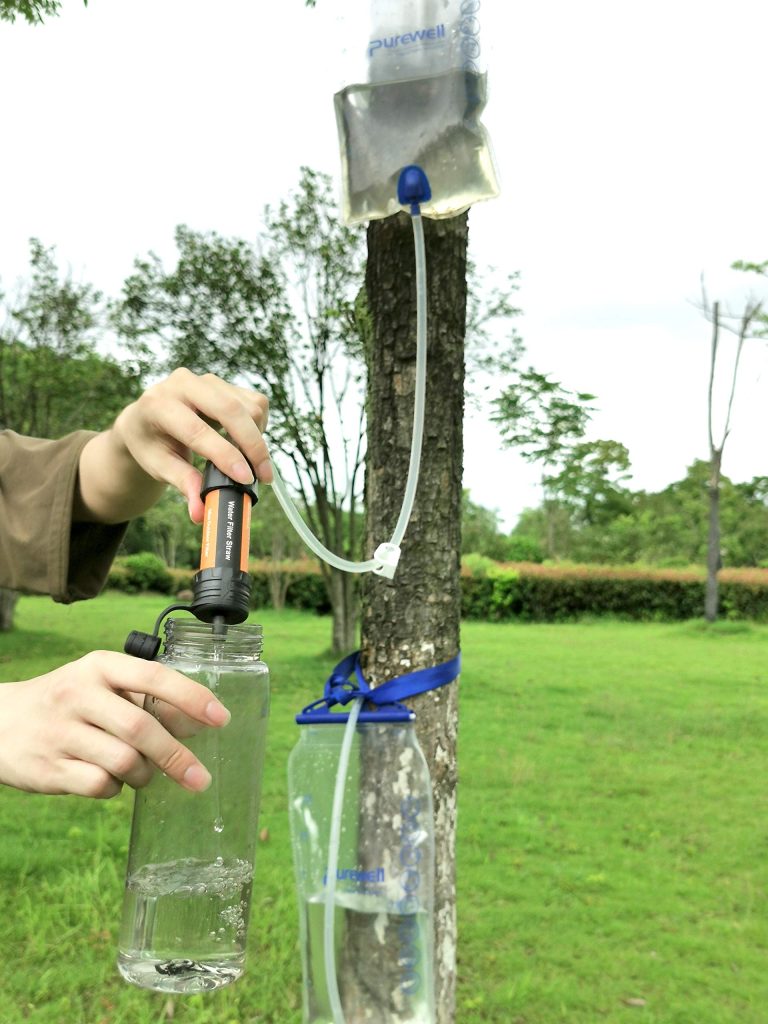
In our testing it provided clean, neutral-tasting water from creek sources, lake edges, and stagnant pond water without any detectable grit, odor, or off-taste. We’re not talking about laboratory conditions with pre-settled, room-temperature source water, which is the scenario most manufacturer testing optimizes for. We’re talking about real-world backcountry water with sediment, tannins, and the kind of murky color that makes you hesitate before putting anything near your mouth. In that context, which is the context that matters for 95% of buyers, the Survival Sip performed with a consistency that surprised us.
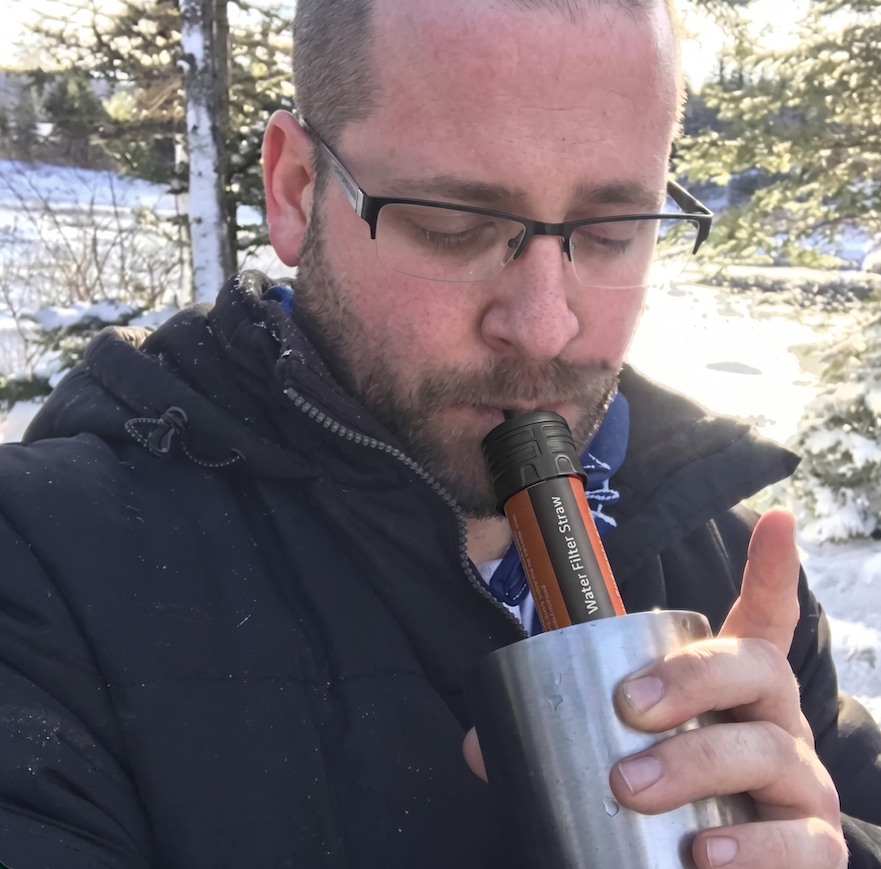
Where it really distinguishes itself is in simplicity. There is no setup. There are no accessories to lose. There is no squeeze pouch to tear, no syringe to carry for backflushing, no inline adapter to configure. You put one end in water and you sip from the other end. That sounds obvious, and it should be, but an astonishing number of filters in this category have managed to complicate the most basic human act of drinking water.
The stainless steel construction deserves mention because it reflects a broader design philosophy. Hollow fiber membranes should not be allowed to freeze after use, because ice crystals can damage the fibers and compromise filtration integrity. This is true across the entire category, and it’s a warning buried in the fine print of every competitor’s manual. The difference is that a stainless steel housing provides meaningfully better insulation than a thin plastic tube, which gives you a wider margin before temperatures become a concern. It also means the filter can be stored long-term in a vehicle emergency kit, a go-bag, or a gear closet without the slow material degradation that affects plastic housings over years of sitting.
Build quality matters in this category more than most reviewers acknowledge, because a portable water filter is not a product you use every day and evaluate constantly. It’s a product you store for weeks or months and then need to perform flawlessly the one time it matters. The Survival Sip feels like it was designed by someone who actually thinks about emergency preparedness as a practical discipline rather than a gear-acquisition hobby, which in our experience is not something you can say about every product in this category.
One last thing worth knowing
The Survival Sip is our top recommendation for 2026 for the majority of people who want a portable water filter for emergency preparedness, hiking, or travel, and if you’re considering it, it’s currently available with a promotional discount using code SIP26 at checkout. These promotions have historically been brief and we have no visibility into how long this one will last. Every purchase includes a 90 day money-back guarantee, which at this price point makes the risk of trying it essentially zero.
FAQ
Do I really need a portable water filter, or can I just boil water?
Boiling works. It kills bacteria, viruses, and protozoa effectively, and it costs nothing. If you have a heat source, a container, time, and the patience to wait for the water to cool before drinking, it’s a perfectly valid method. The practical issue is that those conditions aren’t always available. A portable filter requires no fuel, no container, no wait time, and no planning. You walk up to a water source and drink. In an emergency scenario where you may not have access to a stove, or on a day hike where carrying fuel doesn’t make sense, a filter is the faster and more practical option. Most preparedness experts recommend having both capabilities available, since they cover different failure modes.
How does a 0.1 micron filter actually work, and what does it remove?
Hollow fiber membrane filters work through simple physical exclusion. The membrane contains thousands of tiny tubes with pores measuring 0.1 microns in diameter. Water passes through, but anything larger than the pore size physically cannot. At 0.1 microns, that includes bacteria like E. coli and salmonella (typically 0.2–5 microns), protozoan cysts like giardia and cryptosporidium (5–15 microns), and sediment, microplastics, and particulate matter. It will not remove viruses (0.02–0.1 microns), dissolved chemicals, heavy metals, or salt. No straw or squeeze filter on the market removes these without chemical treatment or a purifier-class device like the Grayl. For the vast majority of North American and European backcountry and emergency scenarios, bacterial and protozoan filtration is what matters, and a properly manufactured 0.1 micron membrane handles that reliably.
How long do these filters actually last, and how do I know when to replace one?
Filter lifespan varies significantly across products, and the numbers manufacturers list are tested under controlled conditions with relatively clean source water. Heavily silted or turbid water will shorten the effective life of any filter. The most reliable indicator that a filter needs replacing is flow rate. As the membrane accumulates particulate matter, it becomes progressively harder to draw water through. When sipping becomes noticeably labored even after cleaning or backflushing (if the filter supports it), the membrane is approaching the end of its useful life. Some filters can be backflushed with a syringe to restore flow, which extends usability considerably. Straw-only filters that don’t support backflushing will generally have a shorter practical lifespan regardless of what the packaging claims.